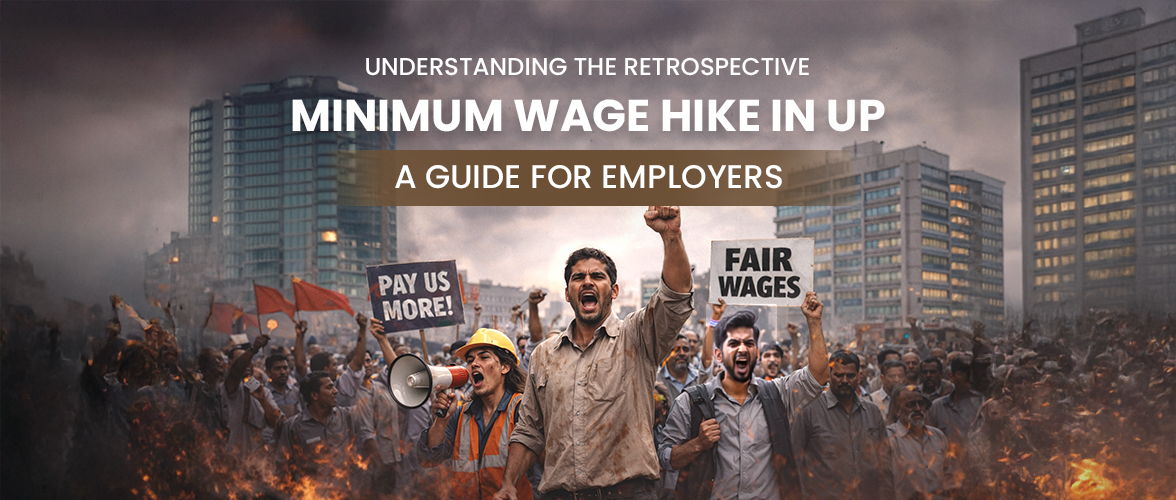



If you are running a business in Noida or nearby areas, the past few weeks have probably been a bit unsettling. The worker protests in April 2026 brought wage concerns right to the forefront and soon after, the government announced a minimum wage hike in Uttar Pradesh, effective from 1st April itself.
Now, because this change is retrospective, it’s not just about updating salaries going forward. It means going back, recalculating and fixing what’s already been processed. Naturally, a lot of employers are trying to figure out what exactly needs to be done and how quickly.
What Actually Happened?
Around mid-April, a large number of workers across Noida and surrounding industrial belts stepped out to protest. The concern was that expenses are rising, but wages weren’t keeping pace.
In some areas, things escalated, and the pressure led to a quick response from the government. The result was roughly a 21% increase in minimum wages. While the intent was to address worker concerns, the immediate implementation has created a ripple effect for businesses.
What Has Changed in Numbers
Here’s what the revised wages look like from April 1, 2026:
- Unskilled: ₹13,690 (earlier ₹11,313)
- Semi-skilled: ₹15,059 (earlier ₹12,445)
- Skilled: ₹16,868 (earlier ₹13,940)
Since these rates apply from the start of April, employers now need to cover the difference for that month too. In simple terms arrears need to be calculated and paid.
Where Things Get Complicated
On paper, it may sound like a simple update. In reality, it’s a bit more layered.
You are not just revising salaries, you are also:
- Reworking PF, ESI and other statutory contributions
- Adjusting overtime calculations
- Updating payroll records and systems
- Making sure documentation is accurate and complete
And all of this needs to be done carefully, because any mismatch can create problems later especially if inspections happen or employees raise concerns.
Why This Is Bigger Than Just One Update
If there’s one thing this situation highlights, it’s this - labour compliance is no longer something you can deal with later.
With the New Labour Codes slowly coming into the picture, changes like these are likely to become more frequent. Businesses that wait till the last minute usually end up dealing with more stress, more corrections, and sometimes even penalties.
On the other hand, staying a step ahead makes things far more manageable, not just from a legal point of view, but also in terms of employee trust.
What You Can Do Right Now
If you haven’t already, this would be a good time to:
- Sit with your payroll team and review April calculations
- Identify the exact arrears and plan payouts
- Communicate openly with employees to avoid confusion
- Double-check compliance across PF, ESI, and records
Even small clarity at this stage can prevent bigger issues later.
A Quick Word on Support
Handling all of this internally, especially on short notice, isn’t easy. That’s why many businesses prefer to get expert help to ensure nothing is missed.
At Kapgrow, a lot of this work whether it’s compliance checks, payroll corrections, or preparing for labour law changes is handled regularly for companies across Noida, Greater Noida and Ghaziabad. The goal is to simplify things so that businesses don’t have to struggle through every update.
This retrospective minimum wage hike in Uttar Pradesh is one of those moments where acting quickly and correctly really matters.
Yes, it adds to costs. But more than that, it’s an opportunity to get your compliance in order and avoid unnecessary trouble down the line. If things feel a bit unclear right now, that’s completely normal. What matters is taking the right steps from here on. For any guidance or clarity, you can always reach out at www.kapgrow.com.