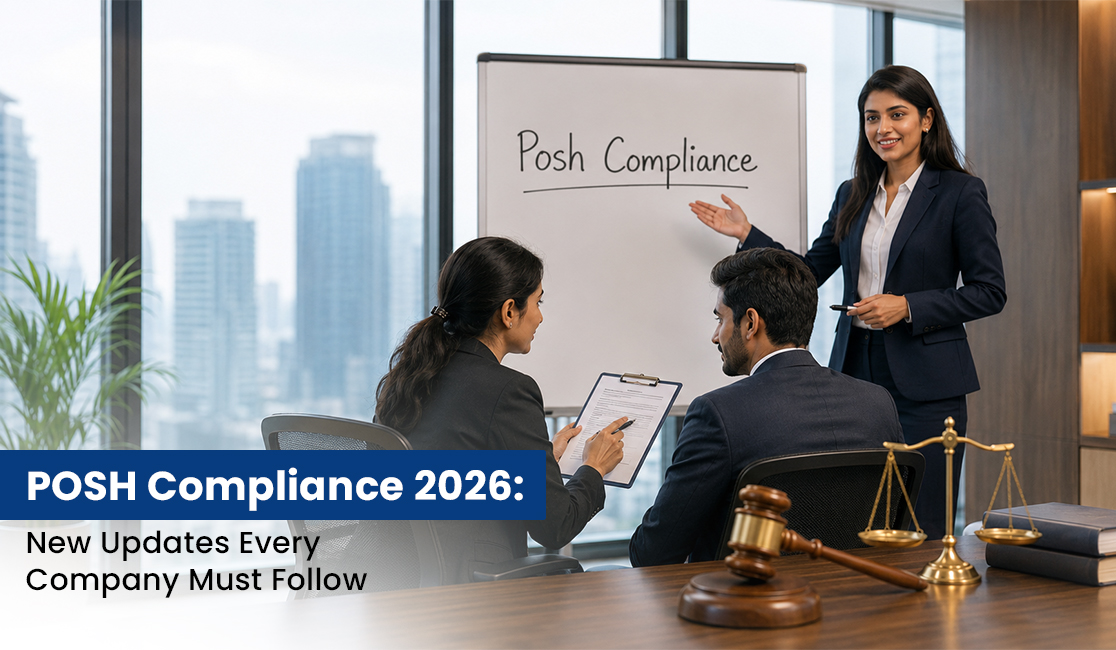



For a long time, workplace compliance was treated as something that was buried in the background. Policies were finalized, committee members were appointed, training was carried out and businesses moved on to more immediate business. That approach is no longer going to work. Workplaces have changed dramatically in the last few years. Teams are spread out, communication takes place on different digital channels and the professional interactions are no longer confined to the office setting.
So companies are looking at whether their existing compliance frameworks match the way employees actually work today. This change is why POSH compliance India is a key focus area for the future of 2026. No longer only legalities matter, it is now the building of systems that employees trust and are able to access.
Why Are Businesses Revisiting POSH Policies in 2026?
In many organisations, the policy itself is not the problem.
The challenge often lies in implementation.
A company may have established procedures, yet employees remain unsure about reporting channels. Internal Committee details may not be easily accessible. Awareness sessions have been held a lot years ago but little has happened since. These gaps are usually unnoticed until a real scenario occurs.
By that stage, businesses often discover that having a policy and having a functioning compliance framework are two very different things.
Has the Definition of the Workplace Changed?
In practical terms, yes.
A manager discussing work during a video call. A project team communicating through messaging applications. Employees collaborating from different cities. These scenarios have become routine.
The workplace is no longer confined to a single physical location.
That reality has influenced how organisations interpret and apply the workplace harassment law. Conduct expectations remain relevant whether in a boardroom, during a business trip or through official digital communication channels. And for employers, compliance needs to be looked at from a wider perspective than ever before.
What Are Organisations Most Commonly Overlooking?
Interestingly, the biggest issues are rarely complex legal matters.
More often, they involve everyday administrative oversights.
Some examples include:
- Internal Committees that have not been updated after staffing changes
- Limited awareness among employees regarding complaint procedures
- Infrequent policy reviews
- Poor documentation practices
- Lack of role-specific training for managers
Individually, these may appear minor. Collectively, they can weaken an organisation's ability to respond effectively when concerns are raised.
Does Annual Training Still Work?
Most HR leaders would agree that awareness cannot be treated as a once-a-year activity.
Employees absorb information differently today. Long presentations packed with policy language are often forgotten within weeks. Practical discussions tend to leave a stronger impression.
That is why many organisations are adopting a more continuous approach to POSH training India. Annual training alone is not enough. Instead, companies are going to be working with bite-sized workshops, regular awareness programs and interactive conversations that keep the conversation going throughout the year. And at the core of the idea is that every employee must be well-informed about the various support systems available to them and understand the procedures for raising a problem.
What Should Companies Review Before 2026?
Rather than undertaking a complete overhaul, organisations can begin with a focused review of key areas:
Internal Committee Readiness
Confirm that committee composition remains compliant and current.
Policy Relevance
Assess whether existing policies adequately address hybrid and remote work arrangements.
Employee Awareness
Evaluate whether employees understand reporting mechanisms and available support systems.
Documentation Standards
Review record-keeping practices to identify gaps before they become compliance concerns.
Leadership Involvement
Visible support from management often influences how seriously workplace policies are perceived.
Summary
Compliance frameworks often test organisations when they least expect it. Therefore, regular reviews, updated procedures and employee awareness have grown to be key. In the context of the upcoming year, strengthening POSH compliance India practices is not just an exercise in compliance in the workplace but also a culture that is accountable and transparent and trusting in the company. Kapgrow supports organisations in strengthening compliance frameworks that are relevant in today’s workplace while being compliant with regulations.