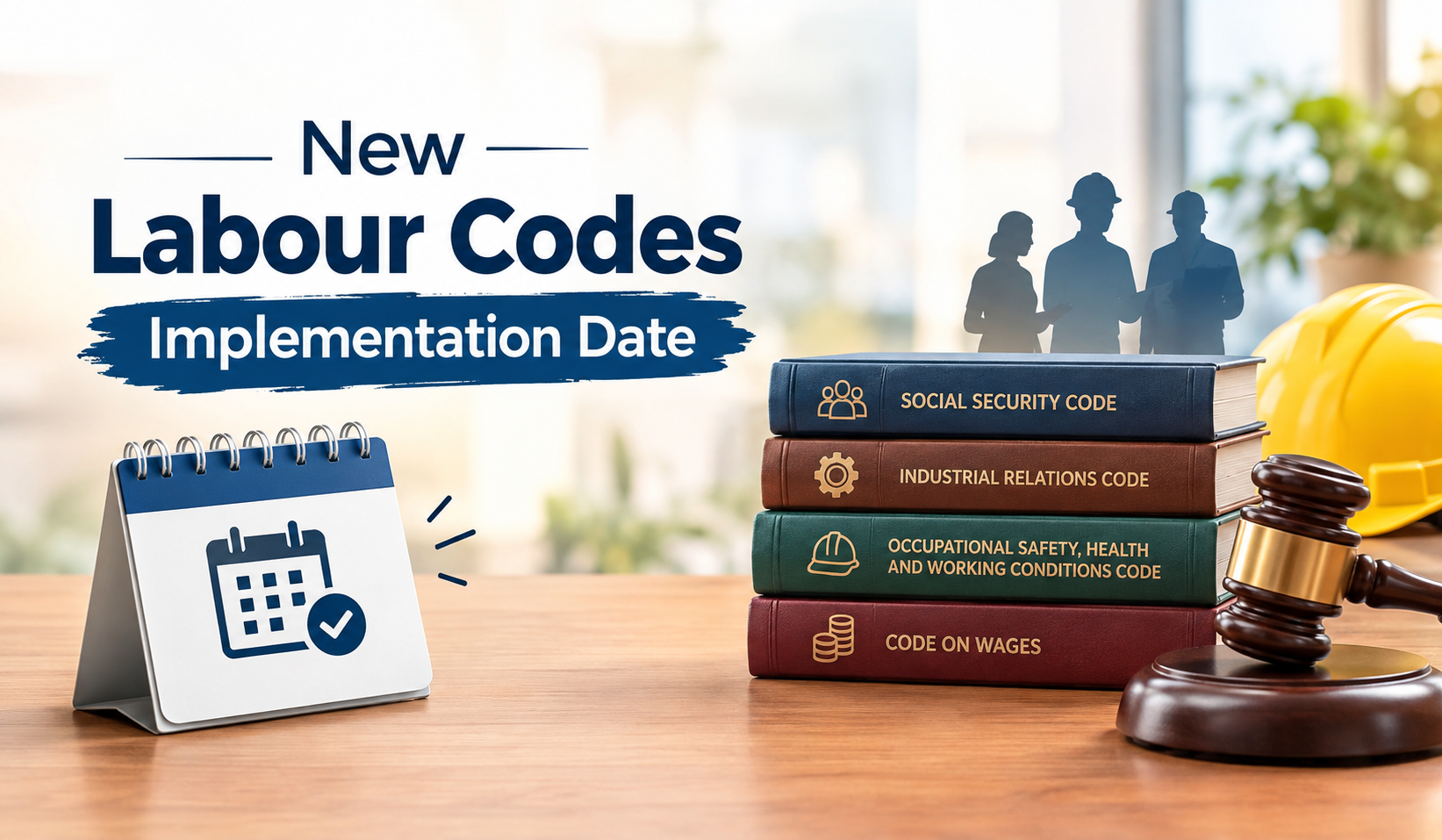



If you are looking for the New Labour Codes 2026 implementation date, there is an important point to clear up first: the four Labour Codes came into force on 21 November 2025. The announcement covered the Code on Wages, Industrial Relations Code, Code on Social Security, and Occupational Safety, Health and Working Conditions Code.
So, why is 2026 still such an important year for employers? Because implementation is not simply about a date on the calendar. Organizations need to understand the changes, review existing policies and bring their HR and compliance processes in line with the new framework.
What is the implementation date of the New Labour Codes?
The Government of India announced that the four Labour Codes would take effect from 21 November 2025, replacing and rationalising 29 existing Central labour laws.
The four Codes are:
● Code on Wages, 2019
● Industrial Relations Code, 2020
● Code on Social Security, 2020
● Occupational Safety, Health and Working Conditions Code, 2020
The reform aims to simplify the earlier fragmented labour-law framework while strengthening provisions around wages, workplace safety, social security and worker welfare.
Why does 2026 matter for employers?
For employers, the practical question is no longer simply, “When will the Codes start?”
It is, “Are our current processes ready?”
Organizations may need to examine employment documentation, wage structures, social-security obligations, HR policies, working conditions and internal compliance systems in light of the new framework.
That review should not be left until an issue appears.
What are the four Labour Codes about?
Each Code addresses a different area of employment regulation.
Code on Wages:
Focuses on wage-related provisions and aims to create a more consistent framework around wages and payment.
Industrial Relations Code:
Deals with industrial relations, trade unions, dispute resolution and related employment matters.
Code on Social Security:
Brings different social-security provisions into a consolidated framework.
OSHWC Code:
Focuses on occupational safety, health and working conditions across covered establishments.
The Government has also highlighted measures including appointment letters, broader social-security coverage and annual health check-ups under the new framework.
What should businesses do in 2026?
There is no benefit in treating compliance as a last-minute exercise. Employers can start with a practical review of their current systems.
Key areas include:
● Reviewing HR policies
● Checking employment documentation
● Assessing wage structures
● Reviewing social-security compliance
● Examining workplace safety requirements
● Updating internal processes where necessary
● Training HR and management teams
The exact impact will depend on the organization's workforce, sector, structure and applicable requirements.
How can organizations prepare for the transition?
A good starting point is an impact assessment.
Instead of changing every policy at once, organizations can identify where the new framework affects their current practices. From there, they can create a transition plan, update documentation and train the people responsible for implementation.
This is where professional guidance can make the process considerably easier.
Kapgrow works with organizations on labour-law awareness, compliance and implementation-related requirements, helping HR and business teams understand what the regulatory changes mean for their operations.
Summary
The four Labour Codes came into force on 21 November 2025. For businesses, 2026 is about understanding the framework, reviewing existing practices and preparing for compliant implementation.