
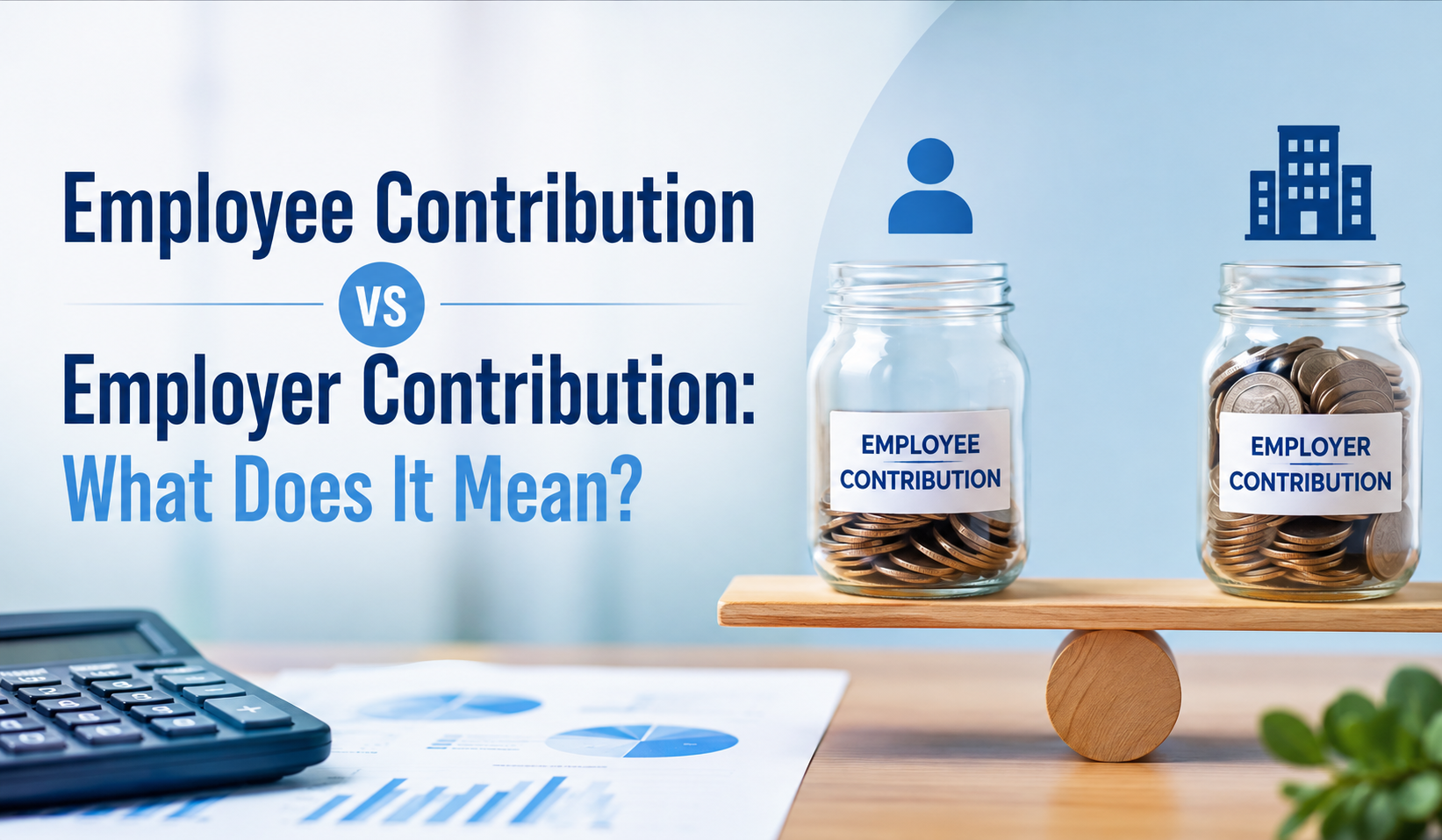



Employee vs employer contribution basically means one's money deducted from your own salary, the other's money your company puts in separately, on top of what you're already earning. Both usually go toward things like Provident Fund, but they're not the same pool of money, and most people don't realize how differently they're calculated until they actually sit down and read their payslip properly.
Why People Get Confused About This So Often
Payslips aren't exactly built for clarity, let's be clear. There's a line item for PF deduction, another mention of employer contribution somewhere in the CTC breakup, and unless someone explains it, most employees just assume it's all one lump sum sitting in their PF account. It's not, not exactly, and that gap in understanding causes a fair bit of confusion, especially when people try to estimate their retirement savings years down the line.
Breaking Down EPF Employee Contribution
EPF employee contribution is the portion deducted directly from your basic salary every month, currently set at 12% under standard EPF rules. This amount gets taken out before you ever see it in your bank account, and it goes straight into your Provident Fund account, building up over your working years.
Here's the thing though, this isn't extra money the company's giving you, it's your own salary, just redirected into a long-term savings account instead of landing in your hands immediately.
What About Employer Contribution?
Employer contribution works a bit differently. Companies also contribute 12% of your basic salary toward EPF, but this money doesn't come out of your take-home pay directly, it's usually built into your CTC as a separate component.
Here's where it gets slightly more layered, out of the employer's 12%, a portion (usually around 8.33%) often goes toward the Employee Pension Scheme, not directly into your PF account, while the rest goes into EPF alongside your own contribution.
Employee vs Employer Contribution, Side by Side
- Source of money — employee contribution comes from your salary; employer contribution comes from company funds, separate from your take-home
- Where it shows up — employee's deducted visibly on your payslip; employer's usually buried within your CTC breakup
- Purpose split — both largely fund EPF, though employer contribution partly splits toward pension too
- Impact on take-home — employee contribution reduces your monthly in-hand salary; employer contribution doesn't touch your take-home directly, but does affect your overall CTC
Why Employer Contribution in CTC Confuses Freshers Especially
This is honestly one of the biggest surprises for anyone starting their first job. Employer contribution in CTC gets added to your total annual package figure, making your CTC look higher than what you'll actually see monthly. So, someone offered ₹6 lakh CTC might see a chunk of that number sitting in employer PF contribution, money that's real, technically yours eventually, but definitely not something you can spend right now.
Why Understanding This Actually Matters
Knowing the difference between employee vs employer contribution isn't just some accounting detail, it genuinely affects how you plan your finances. If you're negotiating a job offer, understanding how much of your CTC is tied up in employer contributions (versus actual cash you'll receive monthly) changes how you compare offers from different companies.
Kapgrow works with organizations trying to make this clearer for their teams, helping HR departments communicate salary structures properly instead of leaving employees to figure it out from a confusing payslip.
Summary
Understanding employee vs employer contribution really clears up a lot of confusion around salary structures, especially once you realize both amounts serve different purposes and come from different sources entirely. EPF employee contribution reduces your take-home directly, while employer contribution in CTC quietly inflates your annual package without touching your monthly cash. Kapgrow continues helping organizations and employees make sense of exactly this kind of compensation detail, so people understand their salary structure clearly instead of just accepting confusing numbers on a payslip.