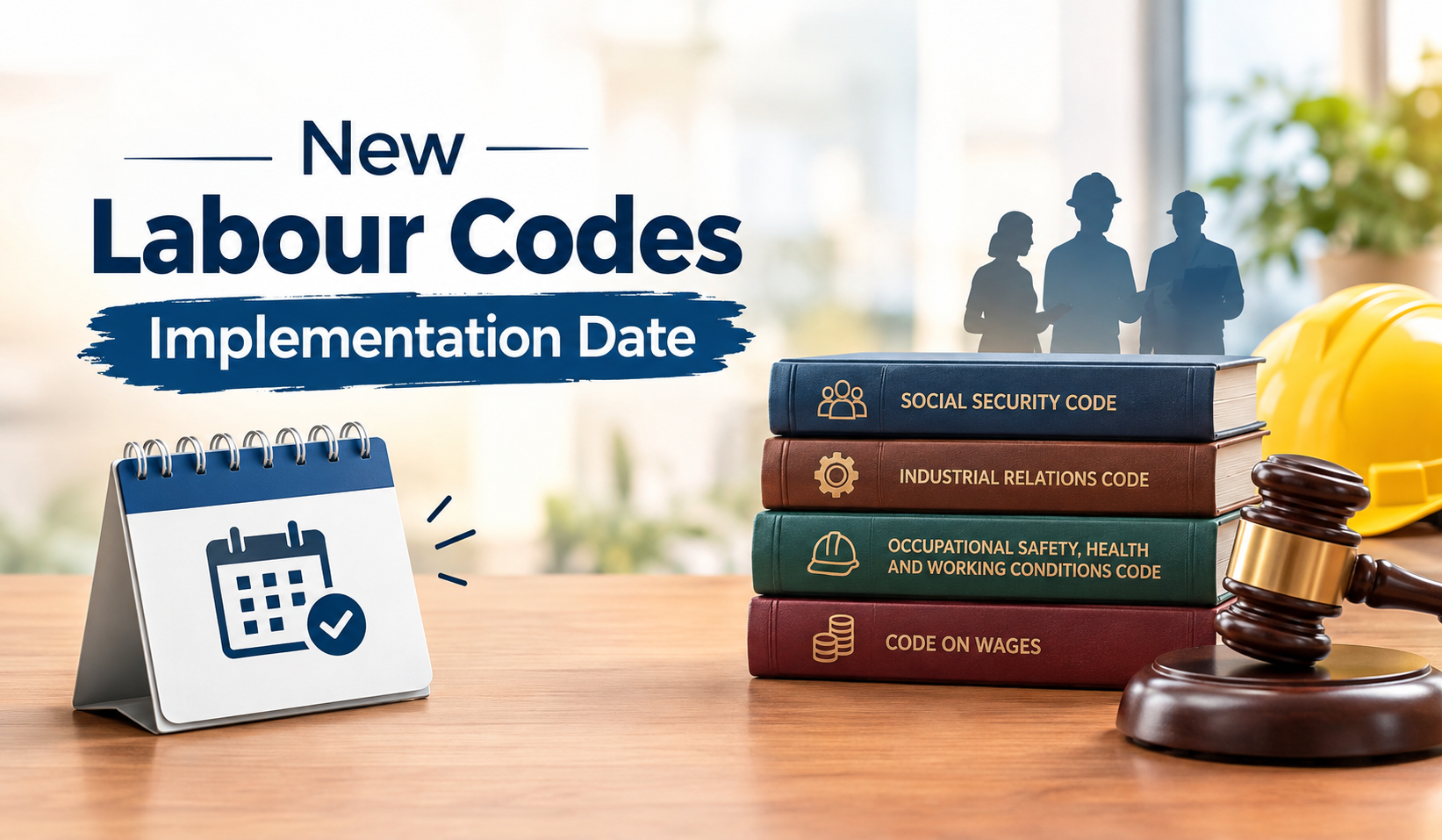




India’s four Labour Codes marked a major shift in the country's employment and compliance framework when they came into effect on 21 November 2025, consolidating 29 existing Central Labour Laws. Since then, the focus has gradually moved from legal implementation to practical adoption. Draft rules, Central Rules, government clarifications and awareness initiatives have helped employers understand the changes. Yet, questions around payroll, employee benefits, state-level rules and HR compliance remain. As the first anniversary approaches, this is a good time to look at the progress made, the Labour Codes implementation challenges organisations still face, and what businesses should prepare for next.
A Year of Labour Codes: Key Developments
The implementation journey has involved several important milestones:
- November 2025 – Four Labour Codes come into effect: The Code on Wages,Industrial Relations Code, Code on Social Security and Occupational Safety, Health and Working Conditions Code brought 29 Central Labour Laws under four broader frameworks.
- December 2025 – Draft Central Rules: Draft rules were published for stakeholder feedback, offering more clarity on wage definitions, allowances and compliance requirements.
- January–February 2026 – Stakeholder consultations: Regional conferences brought States and Union Territories together to discuss implementation and the need for consistent rules.
- March 2026 – Further clarifications: Government FAQs addressed practical concerns around wage calculations, overtime and gratuity.
- May 2026 – Central Rules notified: The notification of Central Rules on 8 May provided further operational guidance on records, registrations, wage administration and statutory procedures.
- September–October 2026 – Ground-level awareness: The Shram Samvad initiative brought government representatives, employers, HR professionals and industry bodies together to discuss the practical application of the Codes.
These developments show that Labour Codes Implementation in India is an ongoing process, requiring coordination between government authorities and organisations.
What Do the New Labour Codes Mean for Employers and HR Teams?
For businesses, the changes go beyond understanding new legal provisions. They require a closer look at everyday HR and payroll practices.
Some key areas that need attention include:
- Salary structures: The revised definition of wages and the 50% rule may affect statutory calculations and employee benefits.
- Gratuity and social security: Employers need to understand applicable eligibility conditions, contributions and benefit calculations.
- HR policies and documentation: Appointment letters, employment terms, leave policies and workplace practices may need revision.
- Workplace safety: Organisations must review their health, safety and working-condition practices.
- Statutory records: Registrations, licences, returns and employee records must align with applicable Central and State Rules.
The new labour codes are intended to simplify compliance, but businesses still need to translate these provisions into clear internal processes.
Labour Codes Implementation Challenges: The Ground Reality
Legal implementation is one thing; applying the rules consistently across different workplaces is another. Many organisations are still working through practical questions.
Some common Labour Codes Implementation Challenges include understanding which provisions apply to their establishment, restructuring salary components, updating payroll systems and revising employment documents. HR and compliance teams also need training
to interpret the changes correctly.
Another concern is coordination between Central and State Governments. Since labour falls under the Concurrent List, organisations must keep track of applicable State Rules and regulatory updates rather than relying on a single set of requirements.
What Should Organisations Do Next?
As the new labour law 2026 framework moves towards wider practical adoption, organisations should focus on preparedness rather than waiting for compliance issues to arise.
A practical starting point is to conduct a labour law compliance review, assess the impact on salary structures and statutory benefits, update HR documentation and train internal teams. Businesses should also monitor official notifications and State Rules to keep their processes
aligned with applicable requirements.
Join Kapgrow's Webinar: 365 Days of Labour Codes – From Legal Implementation to Ground Reality
One year into the new Labour Codes, organisations need more than a summary of legal changes. They need clarity on what these changes mean in practice.
Kapgrow Corporate Advisory Services Private Limited is hosting a webinar to discuss the implementation journey, compliance requirements and the challenges employers face on the ground.
Webinar Details:
- Topic: 365 Days of Labour Codes: From Legal Implementation to Ground Reality
- Date: 20 November 2026
- Time: 4:00 PM IST
Join the session to understand what has changed, what organisations need to prepare for and how to bridge the gap between legal provisions and workplace realities.