



The Ministry of Labour (MoL) of India published the new codes on 21 st November 2025 marking one of the longest and largest updates to India's labour laws in many years. The purpose of this law reform effort is to consolidate existing laws, provide a framework for the future with respect to the rights of employees and the obligations of employers under Indian laws, increase protections for employees, and provide for an easier way to navigate through the labyrinth of laws in order to establish employment in India.
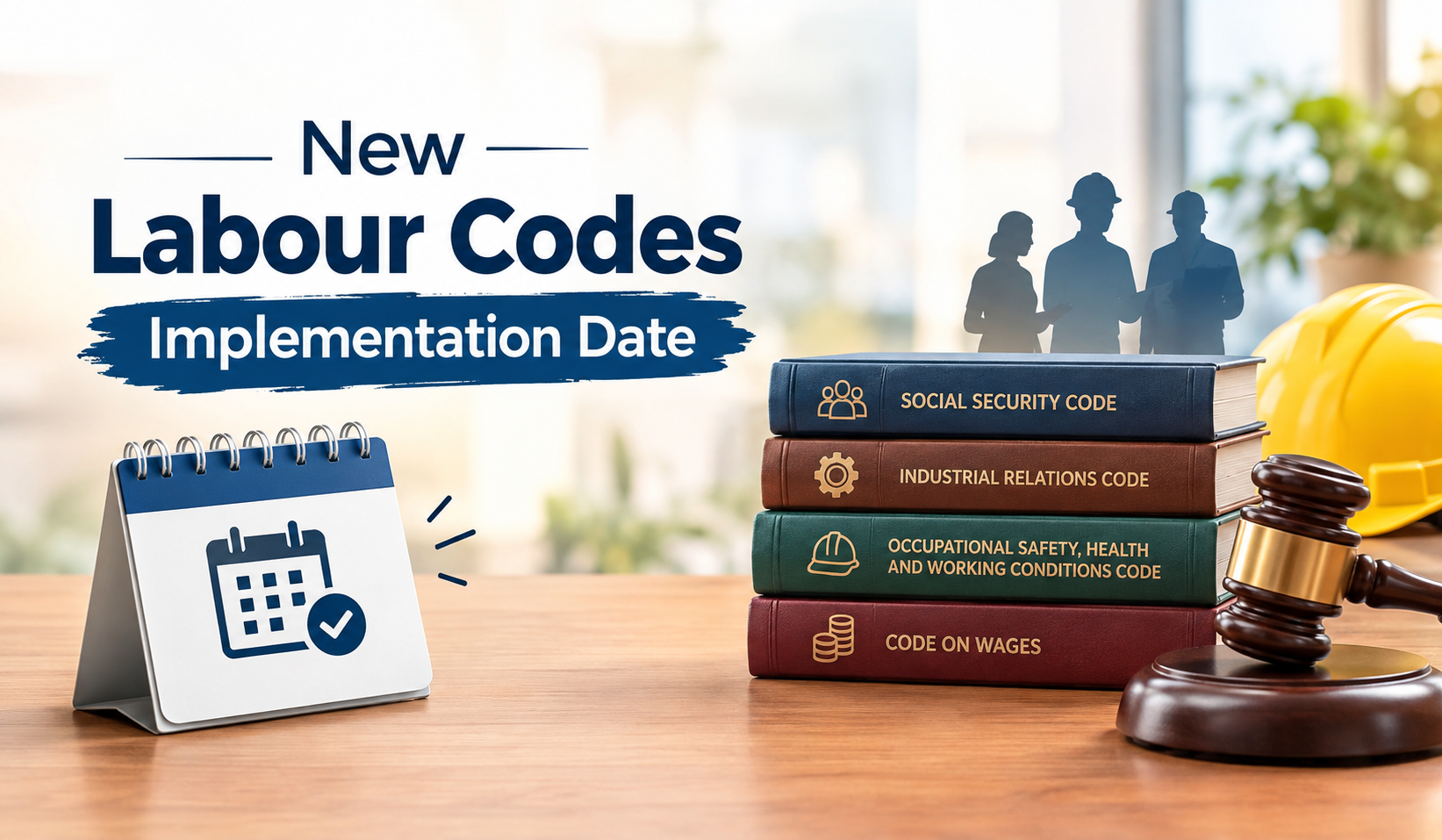
Below is a list of the four new labour codes that affect all working professionals in India:
-
The Code on Wages (2019) addresses issues regarding wages, minimum wages, bonuses, and the payment of wages on time.
-
The Code on Industrial Relations (2020) regulates issues of industrial disputes, layoffs, retrenchments, trade unions, and employment conditions.
-
The Code on Social Security (2020) enhances the social security system of India by providing for the broad protection of social security, provident fund, insurance, gratuity, and other welfare benefits for all workers, both in the organised and unorganised sector, including gig workers and platform workers.
-
The Code on Occupational Safety, Health and Working Conditions (2020) establishes the rights of employees to a safe, decent workplace and to be compensated for work performed, through the setting of minimum health standards, better regulation of working hours, and the establishment of health and safety criteria that are consistent with the requirements of the law.
Key Changes & What Employees Should Know-
-
Universal Minimum Wage & Timely Payment: Under the Wages Code, all workers get a statutory right to a minimum wage - replacing earlier rules where minimum wage applied only to “scheduled” employments. Payment of wages (and bonuses) must now follow stricter timelines to prevent wage delays.
-
Formal Appointment Letters & Gratuity for Fixed-Term Employees: The reforms require formal appointment letters for all employees. Even fixed-term employees (FTEs) who earlier had limited benefits will now be treated at par with regular staff: they get benefits such as gratuity (after just one year), social security, and other rights.
-
Social Security for All- Including Gig/Platform Workers: The Social Security Code now extends protection and welfare to gig workers, contract labour, unorganised sector, and platform workers a big shift that brings previously unprotected segments under formal coverage.
-
Workplace Safety, Improved Conditions & Women’s Opportunity: The OSH Code updates safety standards, working conditions and health requirements. It aligns labour law with modern workplaces, making conditions safer. The Codes also seek to create an environment that increases job opportunities for women and contains provisions to allow for night shifts (to the extent allowed by state-specific laws).
-
Flexibility/Changes in Industrial Relations: Under the IR Code, employers will now have more flexibility. For example, the amount of employees required for an employer to seek government approval for lay-off/ retrenchment/closure has increased from 100 employees to 300 employees. Under the IR Code, it is easier for a company to restructure; however, it raises concerns from unions regarding job security.
What This Means - Advantages/Disadvantages:
The reform represents a significant milestone for Indian workers by streamlining decades-old and fragmented regulations and creating a more transparent and inclusive labour market. All workers regardless of sector (formal, informal, gig, contract) can benefit from minimum wage/s, social security, gratuity, fair treatment, and safe working conditions.
The new Labour Codes effective from 21 November 2025 mark a paradigm shift in India’s labour laws. While offering strong protections and benefits to workers, including gig and contract employees, they also introduce greater flexibility for employers. For employees: staying informed, checking your appointment letter, ensuring minimum wage compliance, getting social security registration, and understanding your rights under these codes will be crucial.